


GT Global Transportation Network News | Ocean Freight Market & Supply Chain Update
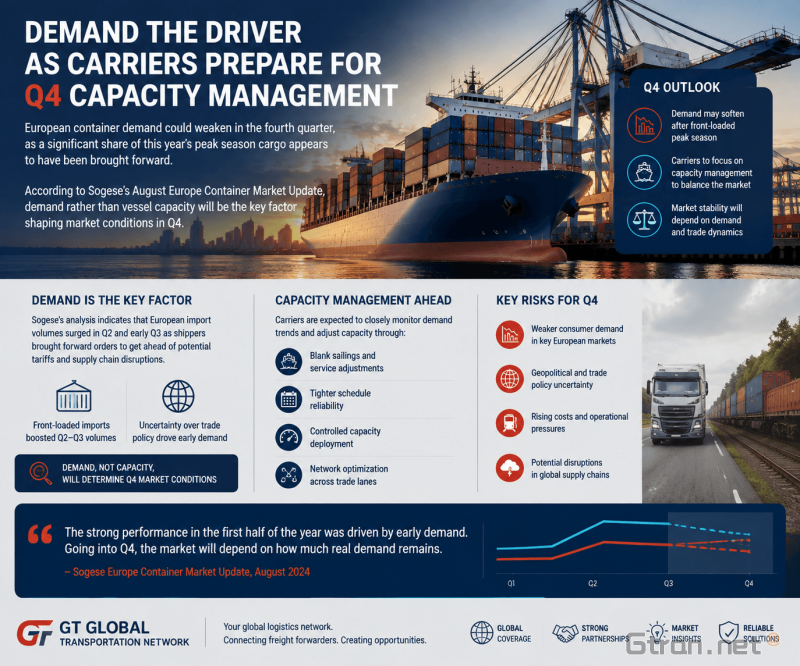
European container shipping markets are entering a period of adjustment as carriers prepare for fourth-quarter capacity management amid expectations of softer demand. After a strong first half of the year, industry analysts suggest that market conditions in Q4 will be driven less by available vessel capacity and more by the actual strength of cargo demand.
According to the latest Europe Container Market Update from Italian container logistics provider Sogese, a significant portion of this year’s peak season cargo appears to have been moved forward earlier than usual. importers and manufacturers accelerated shipments during the first half of the year in response to trade uncertainty, potential tariff changes, and concerns over future supply chain disruptions.
As a result, the traditional peak season demand pattern may become less pronounced, creating new challenges for shipping lines as they evaluate capacity deployment for the final quarter.
For freight forwarders and global logistics providers, the shift highlights the importance of accurate demand forecasting, flexible transportation planning, and close cooperation with ocean carriers.
Early Cargo Movement Changes Traditional Peak Season Expectations
The European container market experienced stronger-than-expected activity during the first half of the year, with many businesses bringing forward shipments to secure inventory and reduce exposure to possible trade disruptions.
This front-loading of cargo helped support container volumes earlier in the year but may reduce demand momentum during the traditional Q4 peak season.
Market participants are now watching several factors closely, including:
Consumer demand across major European economies
import inventory levels after early-season stocking
Global trade policy developments
Geopolitical risks affecting shipping routes
Overall economic confidence among manufacturers and retailers
While early cargo movement provided short-term support for container volumes, the longer-term market balance will depend on whether underlying demand remains strong.
Carriers Focus on Capacity Control and Network Optimization
With demand becoming the key market driver, container carriers are expected to adjust capacity strategies to maintain network balance.
Rather than simply adding additional vessel capacity, shipping lines may focus on carefully managing available space through measures such as:
Blank sailings and schedule adjustments
Optimized vessel deployment across trade lanes
Service frequency adjustments
Improved network efficiency
Capacity management has become an increasingly important tool for carriers as the industry seeks to balance profitability with customer service reliability.
Following several years of market volatility, including pandemic-related disruption, port congestion, and changing trade routes, carriers have become more cautious about deploying excessive capacity into uncertain markets.
Freight Forwarders Face a More Complex Planning Environment
For freight forwarding companies, changing demand patterns create both challenges and opportunities.
A weaker Q4 peak season could influence:
Ocean freight rate expectations
Equipment availability
Port congestion levels
Inventory planning decisions
Customer transportation strategies
Freight forwarders will need to closely monitor market developments and maintain flexible solutions to support customers across different industries.
Digital supply chain visibility, alternative routing options, and strong carrier relationships will remain critical advantages as market conditions continue to evolve.
Global Trade Uncertainty Remains a Key Market Factor
The container shipping market continues to operate in an environment influenced by multiple external factors.
Trade policy changes, geopolitical developments, and regional disruptions continue to affect shipping decisions worldwide. Businesses are increasingly seeking greater supply chain resilience by diversifying sourcing strategies and strengthening logistics partnerships.
Although vessel capacity remains an important consideration, current market indicators suggest that demand will play the leading role in determining freight conditions during the fourth quarter.
Building Flexible Logistics Networks for Future Market Changes
The latest European container market outlook demonstrates the importance of adaptability in global freight management.
As shipping cycles become less predictable, logistics companies must focus on creating flexible transportation networks capable of responding quickly to changing market conditions.
For members of GT Global Transportation Network, staying informed about carrier strategies, demand trends, and capacity adjustments is essential for delivering reliable solutions to customers worldwide.
GT Global Transportation Network will continue monitoring developments across ocean freight, container shipping, and international supply chains to provide industry insights and support collaboration among freight forwarding professionals.
The future of global logistics will depend not only on transportation capacity, but also on the ability to anticipate market changes and build resilient supply chain solutions.


