


GT Global Transportation Network News | European Logistics & Inland Transportation Update
The European logistics network is facing renewed pressure as falling water levels along the Rhine River disrupt inland shipping operations and force cargo owners and logistics providers to seek alternative transportation solutions.
Persistent heatwaves across Europe have extended drought conditions, causing Rhine water levels to decline significantly and creating serious challenges for inland waterway transportation. Shipping operators have warned that sections of the river could become increasingly difficult to navigate, effectively disrupting one of Europe’s most important freight corridors.
As a result, more cargo is expected to shift from inland waterways to road and rail networks, placing additional pressure on already constrained European transportation infrastructure.
For freight forwarders and supply chain professionals, the situation highlights the growing importance of flexible multimodal logistics strategies in managing climate-related and operational disruptions.
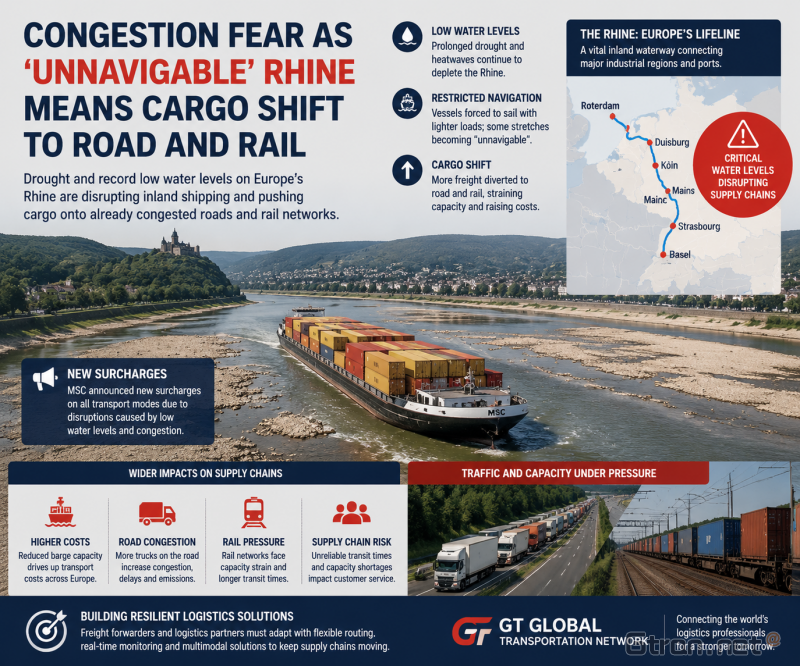
Rhine River: A Critical European Freight Corridor Under Stress
The Rhine River is one of Europe’s most important inland waterways, connecting major industrial regions with key international ports including Rotterdam and Antwerp. It serves as a vital transportation route for containers, chemicals, energy products, agricultural goods, and industrial materials.
However, prolonged periods of extreme heat and reduced rainfall have caused water levels to continue falling, limiting vessel capacity and affecting navigation efficiency.
When water levels become too low, inland vessels are unable to operate at full capacity and must reduce their cargo loads to maintain safe navigation. This creates several operational challenges:
Lower vessel productivity and reduced cargo capacity
Increased transportation costs per shipment
Longer transit times for inland deliveries
Higher demand for alternative road and rail services
For companies relying on Rhine-based logistics solutions, even temporary disruptions can create significant supply chain uncertainty.
Cargo Diversion Creates Additional Pressure on Road and Rail Networks
As inland waterway capacity declines, freight operators are increasingly turning to alternative transportation modes, particularly road and rail.
While rail and trucking networks provide essential flexibility, the sudden increase in demand creates new challenges, including:
Limited rail capacity availability
Increased competition for transport resources
Higher trucking demand and potential congestion
Rising logistics costs across European markets
The shift demonstrates the interconnected nature of modern supply chains. A disruption affecting one transportation mode can quickly create pressure throughout the entire logistics ecosystem.
For freight forwarders, managing these changes requires real-time visibility, alternative routing capabilities, and strong cooperation with transportation partners.
Shipping Lines Introduce Additional Charges Amid Rising Costs
The impact of Rhine disruption has also affected ocean carriers and inland transportation planning.
Major shipping companies, including MSC, have announced additional surcharges related to operational disruptions caused by low water levels and changing inland transport conditions.
These additional costs reflect the increased complexity of maintaining reliable cargo flows when traditional transportation routes become restricted.
For importers, exporters, and logistics providers, the situation reinforces the need for early planning and accurate cost forecasting when arranging European inland transportation.
Climate Risks Become a Growing Factor in Global Logistics Planning
The Rhine disruption is another example of how climate-related events are increasingly influencing global supply chains.
In recent years, the logistics industry has experienced multiple disruptions caused by environmental and geopolitical factors, including:
Extreme weather affecting ports and inland transport
Drought conditions limiting river transportation
Storm disruptions impacting maritime operations
Regional instability changing shipping routes
These challenges are accelerating investment in resilient logistics solutions, including:
Multimodal transportation networks
Digital shipment visibility platforms
Alternative inland corridors
More flexible supply chain planning
Companies are increasingly recognizing that transportation efficiency alone is no longer enough — resilience has become a key competitive advantage.
The Role of Freight Forwarders in Building More Resilient Supply Chains
For freight forwarding companies, the current Rhine situation demonstrates the importance of proactive logistics management.
Successful freight solutions increasingly require:
Flexible Route Planning
Forwarders must evaluate multiple transportation options, combining river, rail, road, and ocean services to minimize disruption risks.
Strong Carrier Partnerships
Reliable cooperation with shipping lines, rail operators, and trucking providers enables faster responses when market conditions change.
Real-Time Supply Chain Visibility
Advanced tracking and digital logistics platforms help customers understand shipment status and make informed decisions.
Through global cooperation and local market expertise, freight forwarders play a critical role in maintaining supply chain continuity during periods of uncertainty.
GT Global Transportation Network Perspective
The Rhine River disruption highlights a broader transformation taking place across the international logistics industry.
As climate challenges, infrastructure limitations, and geopolitical risks continue to affect transportation networks, global logistics providers must develop more adaptable and diversified solutions.
For members of GT Global Transportation Network, these developments reinforce the value of international cooperation, information sharing, and strong logistics partnerships.
By connecting freight forwarding professionals worldwide, GT Global Transportation Network continues to support collaboration and innovation across the global supply chain community.
The future of logistics will depend not only on transportation capacity, but also on the ability to adapt quickly when traditional routes face unexpected challenges.
GT Global Transportation Network will continue monitoring major developments in ocean shipping, inland transportation, freight forwarding, and global supply chain trends to keep industry professionals informed.


