


GT Global Transportation Network News | Port Operations & Global Supply Chain Update
The global maritime industry continues to face heightened uncertainty as geopolitical disruptions reshape shipping routes, port operations, and supply chain strategies. The effective closure of the Strait of Hormuz and the resulting disruption to regional shipping activity have significantly affected APM Terminals Bahrain’s 2026 performance, highlighting the vulnerability of critical maritime gateways to geopolitical events.
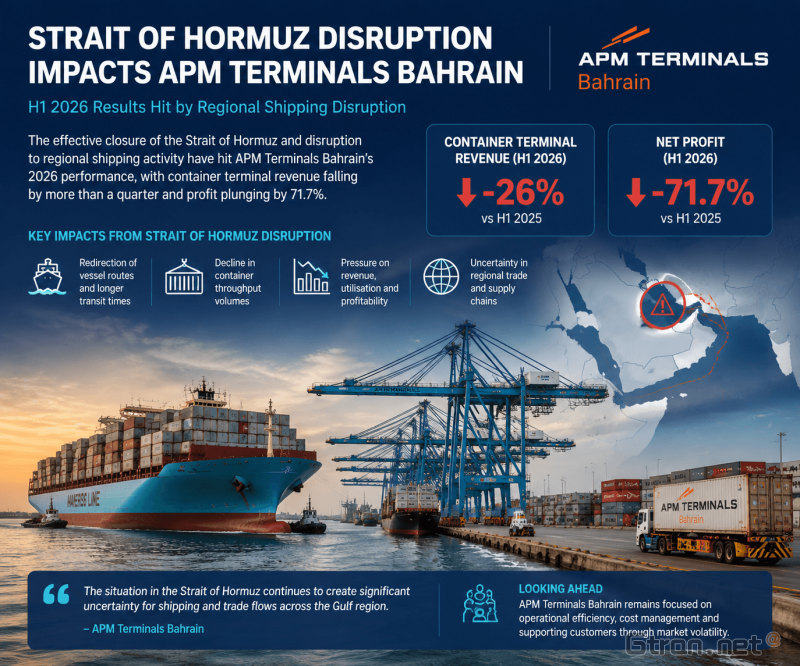
According to recent company performance updates, APM Terminals Bahrain experienced a substantial decline in financial results during the first half of 2026, with container terminal revenue falling by more than a quarter and profit decreasing by 71.7% compared with the same period of the previous year. The downturn reflects the broader impact of reduced vessel activity, lower container throughput, and operational challenges across the Gulf region.
For global freight forwarders, shipping companies, and logistics providers, the situation demonstrates the importance of supply chain resilience and the need for flexible routing strategies in an increasingly unpredictable global trade environment.
Strait of Hormuz: A Critical Maritime Gateway Under Pressure
The Strait of Hormuz remains one of the world’s most strategically important maritime passages, connecting the Persian Gulf with international shipping routes. A significant portion of global energy shipments and regional container traffic relies on the stability of this corridor.
Disruptions affecting vessel movement through the region have created immediate challenges for shipping operators, including:
Longer transit routes and increased sailing times
Reduced vessel calls at regional ports
Lower container handling volumes
Higher operational uncertainty for carriers and logistics providers
As shipping lines adjust schedules and evaluate alternative routing options, regional terminals have faced pressure from changing cargo flows and reduced utilization.
For ports such as APM Terminals Bahrain, which serve as important logistics hubs in the Gulf region, fluctuations in vessel activity can directly influence container volumes, terminal productivity, and financial performance.
Impact on Port Operations and Regional Trade Flows
The decline in APM Terminals Bahrain’s first-half performance reflects the wider challenges currently affecting regional maritime logistics.
Container terminals depend heavily on stable vessel schedules and consistent cargo volumes. When shipping activity is disrupted, the effects extend throughout the logistics ecosystem, impacting:
Port handling operations
Inland transportation networks
Warehousing demand
Freight forwarding schedules
import and export supply chains
Reduced vessel calls can also create operational inefficiencies, as terminals must adjust labor planning, equipment utilization, and capacity management in response to changing demand patterns.
The situation highlights how interconnected global supply chains have become, where disruptions in one strategic maritime location can influence trade flows far beyond the immediate region.
Freight Forwarders Adapt to a More Volatile Shipping Environment
The latest disruption reinforces the growing importance of flexibility and risk management within the freight forwarding industry.
Global logistics providers are increasingly focusing on:
Alternative Routing Solutions
Freight forwarders are working closely with carriers to identify alternative transportation options, optimize vessel schedules, and minimize delays caused by regional disruptions.
Enhanced Supply Chain Visibility
Digital tracking platforms and real-time shipment monitoring have become essential tools for businesses seeking greater control over cargo movements during uncertain market conditions.
Diversified Logistics Networks
Companies are increasingly evaluating multiple port options, inland connections, and multimodal transportation solutions to reduce dependence on single trade corridors.
For members of the GT Global Transportation Network community, these developments emphasize the value of international cooperation, reliable partnerships, and proactive supply chain planning.
Shipping Industry Faces Continued Geopolitical Challenges
The impact of the Strait of Hormuz disruption comes amid a period of broader instability in global shipping. Recent years have seen the maritime industry navigate multiple challenges, including:
Red Sea shipping disruptions
Port congestion and capacity constraints
Changing trade routes
Rising operational costs
Environmental regulation pressures
These factors have accelerated investment in technology, fleet optimization, and supply chain resilience across the shipping and logistics sectors.
Major carriers and terminal operators are increasingly prioritizing operational flexibility, digital transformation, and risk management capabilities to better respond to unexpected disruptions.
Building More Resilient Global Logistics Networks
While short-term market conditions remain challenging, the logistics industry continues to adapt through innovation and collaboration.
Ports and terminal operators are investing in automation, data-driven operations, and improved customer solutions to strengthen competitiveness. Freight forwarders are expanding global networks and developing contingency plans to support customers during periods of uncertainty.
The experience of APM Terminals Bahrain demonstrates an important lesson for the international logistics community: maintaining resilient supply chains requires more than transportation capacity — it requires strategic planning, strong partnerships, and the ability to respond quickly to changing market conditions.
GT Global Transportation Network Perspective
As global trade continues to evolve, geopolitical developments will remain a key factor influencing shipping routes, port operations, and logistics strategies.
GT Global Transportation Network will continue monitoring major industry developments and sharing insights on ocean shipping, freight forwarding, port operations, and supply chain trends to help logistics professionals worldwide make informed decisions.
In an era of increasing uncertainty, collaboration across the global freight forwarding community remains essential to creating more flexible, reliable, and resilient transportation networks.
Source: APM Terminals Bahrain performance updates and latest global maritime industry developments


