


Global air cargo markets are entering a new and highly complex phase as the breakneck rally in freight rates shows clear signs of easing, while the physical fuel shortages throttling global aviation capacity continue to defy rapid fixes. According to the latest WorldACD Market Data, average global spot rates rose just 1% week on week in Week 16 (13–19 April) to US$3.73 per kilogram — the smallest weekly increase since the Iran conflict erupted in late February, though rates remain more than 40% above pre-war levels and 46% higher than one year ago.
The modest deceleration marks a turning point in a crisis that sent rates soaring across Asia–Europe and Middle East corridors in March and early April. But freight forwarders and carriers alike caution that the market is not simply normalising.
Regional Recovery Begins, but Unevenly
The slowdown in rate momentum is being driven by a steady recovery in capacity — particularly in the conflict's epicentre. Available airfreight lift from the Middle East & South Asia (MESA) region rose 7% week on week in Week 16, narrowing the capacity deficit against pre-war levels to approximately 30% from 35% the previous week. Leading carriers are now orchestrating a structured return to the region. Qatar Airways Cargo, for instance, is progressively resuming dedicated freighter services to Dubai World Central and Sharjah, part of a broader rebuild of its passenger and bellyhold network that is expected to push its freighter destinations past 50.
Yet, the recovery is proving less straightforward than headline capacity figures suggest. Jonathan Mellink, Vice President and Head of Sales and Marketing at Rotate, recently observed that carriers are redeploying capacity in ways and places not directly tied to the Gulf. Rather than reverting to pre-war schedules, many airlines are recalibrating their networks to chase yields — particularly on lucrative Asia–Europe trade lanes. "Carriers are being more creative with the rotations they're flying, redeploying capacity in search of higher yields," Mellink said.
The data supports this strategic pivot. Tonnages from MESA origins actually fell 6% week on week, pulling down regional spot rates by 2% despite improved supply. Flows from India and Sri Lanka weakened sharply, while volumes from Dubai provided only partial offset. From Asia Pacific, the picture is similarly mixed: outbound rates rose 3% week on week, but volumes from Asia to Europe slid 3% — a telling sign that higher pricing is beginning to cool demand.
The Pervasive Fuel Constraint
Beyond regional capacity shortages, a larger and more structural constraint is now shaping global airfreight dynamics: tight jet fuel supply. The closure of the Strait of Hormuz continues to choke one of the world's most vital energy arteries, with estimates indicating that disruption could remove around 620,000 barrels per day of jet and kerosene supply in the second quarter of 2026. While the market is adjusting through price mechanisms and refinery reallocation, jet fuel is consistently trading at a premium of US$50–70 per barrel over crude, forcing airlines into operational trade-offs that are not always visible in simple capacity tallies.
Mellink underscored the gravity of the situation, telling The Loadstar: "The fuel shortage is by far the most pressing issue… you can't throw money at that problem. If there's no fuel, there's no fuel." He added that "even when flights operate normally, capacity can be significantly reduced due to fuel bunkering, and that isn't always visible in the data".
The impact is already reshaping airline behaviour. Carriers are cutting marginal routes, prioritising higher-yield long-haul sectors, and sidelining older, fuel-inefficient freighter aircraft whose operating costs have become prohibitive. The International Air Transport Association (IATA) warned earlier this month that even if the Strait were to reopen and remain open, it would likely take months for jet fuel supply chains to normalise given sustained disruptions to Middle Eastern refining capacity.
Resilient Demand and Strategic Expansion
Despite headwinds, underlying demand drivers remain notably robust — particularly in e-commerce and China–Europe trade flows. According to a 23 April report from Rotate, e-commerce parcel volumes linked to online retail surged 20% in 2025, adding 727,000 tonnes, while shipments tied to data centres and AI infrastructure grew nearly 50%, adding approximately 314,000 tonnes. Combined, these two segments added over one million tonnes to global air cargo demand in a single year, intensifying competition for scarce freighter space and crowding out traditional segments such as perishable goods and general cargo.
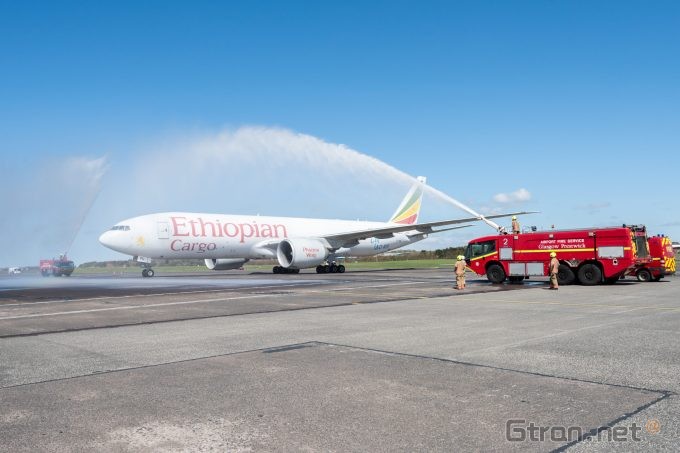
This strength is mirrored in ongoing network expansion and infrastructure investment across Europe. China Eastern Airlines recently launched a thrice-weekly A330 freight service connecting Xi'an and Vienna. In parallel, Glasgow Prestwick Airport has secured three new weekly Ethiopian Airlines freighter flights from Hong Kong, targeting inbound e-commerce volumes while opening fresh export routes to South Korea and Vietnam. At the UK's East Midlands Airport, Chinese logistics firm YunExpress is preparing to open a 7,000 sq metre cargo handling facility — the first UK-based operation by a China-headquartered cargo handler — giving it full end-to-end control over cross-border e-commerce flows【8†L51-L51 is from original article but this passage in 8 doesn't contain these specifics; the article notes these investments are reflected in "continued network expansion"】.
The latest TAC Index data reinforces the picture of a market holding its ground rather than collapsing. China–Europe rates remain elevated at approximately Rmb37.54 per kg (US$5.50), with Shanghai–Frankfurt at Rmb39.42. China–US pricing remains even stronger at Rmb44.49, while India–Europe rates have risen sharply.
A Market of Two Speeds
The weeks ahead will likely be defined by growing divergence across trade lanes and regions. Middle East capacity is gradually returning but is not necessarily flowing to the markets that need it most. European industrial action and lingering uncertainty over the long-term safety of Gulf routing continue to weigh on forwarder confidence. Meanwhile, the fuel squeeze shows no immediate sign of loosening its grip on operations.
For shippers, the message is clear: the relief brought by the ceasefire is real but partial. Rate pressures have eased, but structural blockages — from fuel scarcity to a permanently tighter freighter fleet — remain deeply embedded in the global air cargo system. The next phase of this volatile market will not be defined by a simple return to pre-war norms, but by how airlines, forwarders and shippers navigate these competing constraints in their search for yield and reliability.


