


The east-west Mediterranean container feeder network is facing renewed strain from the ongoing Middle East conflict, but unlike the port congestion crisis that paralyzed West Mediterranean terminals following the initial Red Sea disruption, shippers and forwarders now confront a more insidious challenge—equipment circulation failures and tightening feeder connection windows.
According to the latest Sogese Container Market Update (April 2026), the region is not experiencing a true container shortage, but rather a severe circulation problem. "Containers are out there, but they are not where or when the market needs them," the Italian container management firm stated .
"The market today is defined by how efficiently equipment can move, not how much of it exists," said Andrea Monti, CEO & Managing Director of Sogese. "This is not a supply problem, it's a circulation problem" .
The pressure is particularly acute for importers in central Mediterranean markets such as Italy, where the continued rerouting of vessels around the Cape of Good Hope has intensified dependence on West Mediterranean hubs including Algeciras and Tanger Med. This shift has transformed feeder networks into a critical vulnerability point, with connection windows tightening due to mainline schedule unreliability while feeder operators struggle to handle ever-greater volumes .
"The feeder leg is no longer secondary, it is increasingly where both cost and reliability are determined," Monti emphasized .
Schedule reliability data reveals the scale of the challenge. According to Sea-Intelligence, the 21 deepsea services from Asia to the Mediterranean recorded a 64.7% on-time arrival rate in January/February 2026—an improvement of 21.5 percentage points compared to the same period last year, but still representing a 2.7 percentage point decline from the previous month .
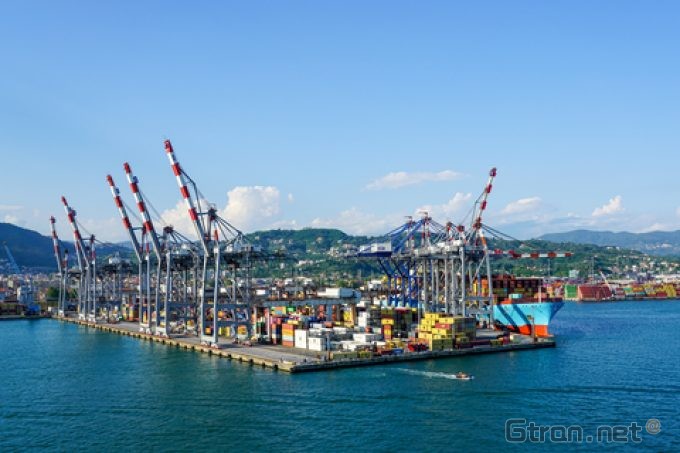
Port congestion at key West Mediterranean hubs remains elevated. Xeneta's eeSea liner database shows that 50% of vessels at Algeciras are currently waiting for a berth, with 27% experiencing delays at Tanger Med . On Asia-Mediterranean feeder and intra-regional services calling at Italy's main import gateways, on-time vessel arrivals have deteriorated to levels last seen in mid-2024, with the average ship arriving five days late at Genoa and eight days late at La Spezia last month .
"Italy reflects broader European dynamics, with added sensitivity to routing shifts and feeder reliability," Sogese noted in its market report. "Italy remains resilient, but commercially more complex to serve—forwarders face margin pressure as operating costs rise while customers remain price-sensitive" .
The situation underscores a broader industry shift. While major carriers such as Maersk and Hapag-Lloyd's Gemini Cooperation have achieved industry-leading schedule reliability of around 90% on their core Asia-Europe services, the benefits have not fully extended to Mediterranean feeder operations and secondary ports . As carriers begin gradually returning some services to the Suez Canal, the transition risks creating further network disruption and port congestion as global supply chains adjust to new schedules .
For Mediterranean shippers, the immediate concern is not vessel capacity but the efficient movement of containers through increasingly complex feeder networks—a challenge that may prove more difficult to resolve than the congestion crises of 2024.


