


Global air freight rates surged to multi-year highs in the week leading up to the announcement of a two-week Middle East ceasefire, with industry experts warning that even a temporary halt in hostilities may not quickly resolve the severe capacity and fuel constraints now gripping the market.
The Baltic Air Freight Index, calculated by TAC Index, jumped another 5.1% in the week ending 6 April, marking a 15.8% year-over-year increase as the closure of critical Gulf airspace continued to choke capacity on Asia-Europe corridors . Rates from China to both Europe and the United States have now climbed nearly 30% compared to April 2025, with Hong Kong outbound rates rising 8.6% week-on-week and Shanghai up 6.4% .
"This is not normal in this season... this is actually the market repricing for risk," said Milena Milenkovic, head of air freight EMEA at Flexport, describing how peak-season pricing has emerged during what is traditionally a quieter period for air cargo .
The capacity shock has been severe and sudden. When key Middle Eastern hubs—which typically handle approximately half of all Asia-Europe air cargo—were forced to close due to the conflict, roughly 30% of capacity on the corridor disappeared almost overnight . Airlines have been scrambling to reroute flights through Central Asia and deploy technical stops, adding both significant cost and transit time to shipments.
The disruption has triggered a decisive shift toward short-term purchasing. According to Flexport, approximately 52% of global air cargo is now moving on spot rates, approaching levels last seen during the COVID-19 pandemic . "Committing to long-term rates today is extremely difficult... nobody knows how long this disruption will last," Milenkovic noted .
Ocean freight disruption has compounded the pressure on air cargo, as shippers pivot to air transport to protect supply chains. "When ocean networks come under strain, air becomes the pressure valve," observed Xeneta, the freight analytics platform, adding that companies are prioritizing supply chain reliability over cost considerations .
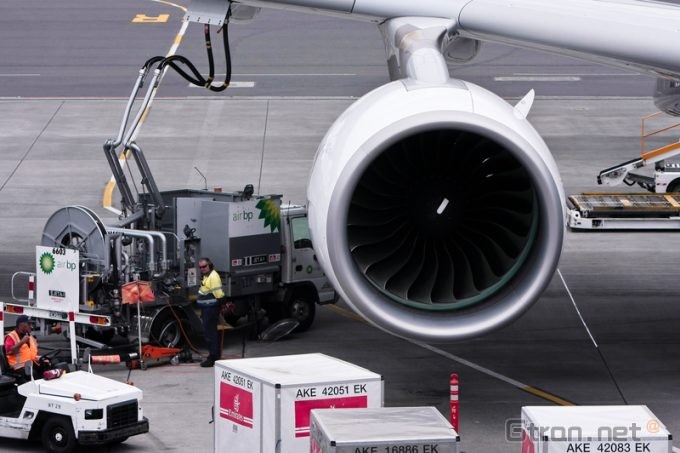
However, a more fundamental constraint is emerging around jet fuel availability—a factor that could limit capacity recovery even if the ceasefire holds. Jet fuel prices have surged dramatically, with IATA data showing prices at $195.19 per barrel in late March, nearly double the level seen just one month earlier . Asia has been particularly hard hit, with governments in key refining hubs moving to protect domestic supply. South Korean airlines have urged export restrictions, China has reportedly limited shipments, and Indonesia has sought alternative supplies from Japan .
The fuel crisis is already affecting operations on the ground. Flexport reports that fuel rationing has been introduced at several Italian airports including Venice, Treviso, Bologna, and Milan Linate, signaling how supply constraints are spreading into Europe . While European markets have been partially insulated by supplies from the North Sea, Libya, and West Africa, airline executives warn that disruption could escalate. Ryanair CEO Michael O'Leary cautioned there is a "reasonable risk" that 10% to 25% of European fuel supplies could be affected in May and June if the conflict continues .
Industry sources warn that a prolonged fuel shortage would force carriers to curtail freighter operations first, as governments prioritize passenger services, with express capacity also coming under pressure .
While the ceasefire announcement triggered a sharp fall in oil prices and lifted financial markets, the air cargo sector faces a longer road to stabilization. "This is not just a Middle East story. It is a jet fuel story... a capacity story... a rate story," Milenkovic emphasized .
For shippers and carriers alike, the critical question now is whether the ceasefire marks the beginning of a sustained recovery, or merely a pause in a market that has been fundamentally repriced for risk.


