


Global container fleet expansion is decelerating, yet ordering activity continues at a blistering pace—with a decisive pivot toward smaller, more agile vessels reshaping the industry's capacity playbook, according to the latest Braemar analysis.
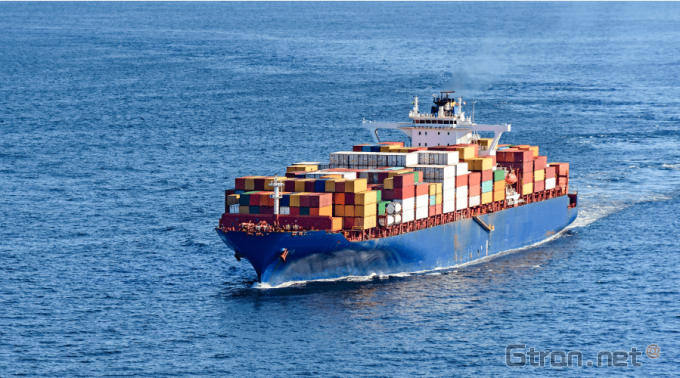
By the close of Q1 2026, the worldwide cellular fleet totaled 32.81 million TEU across 1,416 vessels. The quarter saw approximately 36 deliveries adding roughly 270,512 TEU, translating to net fleet growth of 0.8% and a 6.1% year-on-year capacity increase. This marks a notable cooldown from Q1 2025's 1.75% expansion, signaling what Braemar characterizes as a moderation in near-term supply growth.
Yet vessel contracting shows no signs of fatigue. Year-to-date, operators have ordered approximately 150 vessels—up from 108 at this point in 2024. While these orders represent around 790,000 TEU (down from 977,000 TEU last year), they have propelled the orderbook to an unprecedented 39% of the trading fleet.
The most striking trend is the dramatic downsizing of newbuild specifications. Average order capacity has plummeted from approximately 11,100 TEU in 2024 to 7,400 TEU in 2025, and just 5,200 TEU so far this year. "This clearly signals a move away from ultra-large container vessels toward smaller and mid-sized segments," Braemar noted.
The shift is further underscored by the complete absence of orders for 14,000+ TEU vessels this year. Instead, the largest contracts center on 11,500–13,000 TEU designs, with activity overwhelmingly concentrated in feeder and regional classes. This pattern reflects escalating demand for "flexibility, regional connectivity, and network optimisation" rather than "scale-driven efficiency alone," the broker explained.
Chinese shipyards are capitalizing decisively on this structural transition, now commanding 75% of global orderbook capacity—up from 69% in early 2025. As ordering tilts toward feeder and regional tonnage, China's cost and production advantages in these segments have become increasingly pronounced.
The delivery pipeline is poised to accelerate dramatically from 2027, reflecting the massive orderbook accumulated during the recent contracting surge. Current projections indicate approximately 394 vessels (3.5 million TEU) scheduled for delivery in 2027, followed by 575 ships (5.2 million TEU) in 2028.
Meanwhile, demolition activity remains virtually nonexistent. only two containerships have been scrapped in 2026, and Braemar anticipates that "continually heightened geopolitical instability is likely to keep vessels away from demolition yards," suggesting meaningful recycling may not resume until 2027.
In the charter market, Braemar reported "another active week" despite persistent geopolitical turbulence, service disruptions, and elevated bunker prices. "That market does not seem overly concerned. For now, it remains impressively stable, perhaps even more than one would expect given the broader backdrop," the broker observed, adding that "it would not be surprising if this steady tone continues through the remainder of the year."
Mirroring newbuild trends, second-hand activity remains concentrated in the feeder segment. Though no sales concluded this week, Braemar highlighted evolving buyer profiles, with Chinese inquiries notably increasing. "Over the past 24 months, most of these buyers have been acquiring tonnage either for their own services or for Chinese charters trading in the Red Sea. However, we are increasingly seeing Chinese investors entering the market for vessels with charters attached, or seeking to fix vessels to major lines," the analysis revealed.
This market resilience aligns with broader industry data showing container charter rates entering 2026 with bullish momentum, as forward fixing surges and fixture periods extend to 24 months on average—reducing available tonnage and supporting rate stability throughout the year . Major carriers including COSCO, MSC, Evergreen, and Hapag-Lloyd have continued aggressive fleet investments in early 2026, with COSCO alone ordering 18 LNG dual-fuel vessels worth $2.7 billion in January .


