


Global Shipping Industry – While the world braces for an unprecedented surge in new containerships, the disposal of older, less efficient vessels has ground to a near halt. A new report from Alphaliner reveals a startling trend: container ship demolitions plummeted to a 20-year low in 2025, creating a perfect storm for a looming overcapacity crisis that could reshape global trade for years to come.
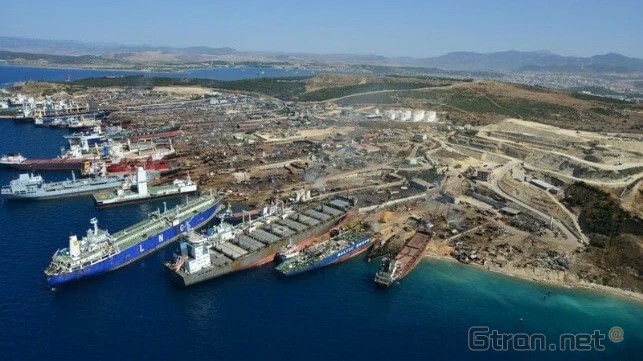
"The healthy container shipping market, with a high demand for tonnage and robust charter rates throughout the year, have explained in great part shipowners' reluctance to dispose of their older tonnage, preferring instead to make the most of the lucrative trading environment," states Alphaliner. This "reluctance" meant only a minuscule 12 ships, totaling just 8,172 TEU, were scrapped in 2025. This pales in comparison to 95,607 TEU recycled in 2024 and a staggering 655,000 TEU in 2016 – a stark indicator of how far the industry has moved from sustainable fleet management.
This minimal recycling is occurring in an industry that now boasts over 7,500 active vessels and a colossal total capacity nearing 34 million TEU. The few ships scrapped were predominantly the oldest and smallest: ages ranged from 20 to 45 years (average 30), with ten out of twelve ships under 1,000 TEU capacity. The largest was the 45-year-old Horizon Enterprise, at 2,400 TEU – a relic compared to today's mega-vessels.
The Looming Tsunami of New Capacity:
This dramatic slowdown in scrapping is happening precisely when a tsunami of new capacity is on the horizon. Linerlytica's data as of end-2025 shows a staggering orderbook of 1,267 vessels, representing over 11.7 million TEU – a colossal 35 percent orderbook-to-fleet ratio. New orders surged by 36 percent year-over-year in 2025, with 671 containerships commissioned.
The pace hasn't slackened in 2026. Just today, Evergreen Marine announced orders for 23 feeder ships (3,100-5,900 TEU) worth up to $1.5 billion, adding to their 2025 orders of 14 LNG dual-fuel 1,400 TEU ships and 11 ultra-large 24,000 TEU vessels. Other major carriers like MSC Mediterranean Shipping Company are also continuing their aggressive newbuilding campaigns.
An "Oversupply Overhang" and "Catastrophic" Future:
Industry experts are sounding the alarm. BIMCO's Chief Shipping Analyst, Niels Rasmussen, warns of a "recycling overhang of 1.8 million TEU" due to minimal scrapping over the past five years. "If recycling ends lower than our forecast, we expect that the shortfall will add to oversupply of capacity in the market," he noted.
Adding to these concerns is the anticipated reopening of the Suez Canal – Red Sea corridor. The current diversions around Africa are temporarily absorbing a significant portion of global capacity due to longer transit times. When this capacity is released back into the market, it could exacerbate the oversupply to "catastrophic" levels, as some analysts have previously warned.
The industry's reluctance to scrap older, less efficient tonnage, combined with an insatiable appetite for new, larger vessels, is setting the stage for an unprecedented glut in capacity. This "ghost fleet" of aging ships, refusing to retire, is on a collision course with a wave of new mega-ships, promising a future of intense competition, severely depressed freight rates, and immense pressure on carriers to maintain profitability in a market fundamentally skewed by oversupply. The question isn't if the capacity crisis will hit, but how severe it will be, and which carriers will weather the storm.


