


The global shipping industry is taking a significant step forward in cargo safety with the launch of a new AI-powered screening tool by the World Shipping Council (WSC), as part of its comprehensive Cargo Safety Program. This industry-led initiative aims to tackle the persistent danger of misdeclared and undeclared hazardous materials, a leading cause of fires at sea, thereby enhancing protection for crews, vessels, and the marine environment. Notably, carriers representing over 70 percent of global TEU capacity have already joined the program at its inception.
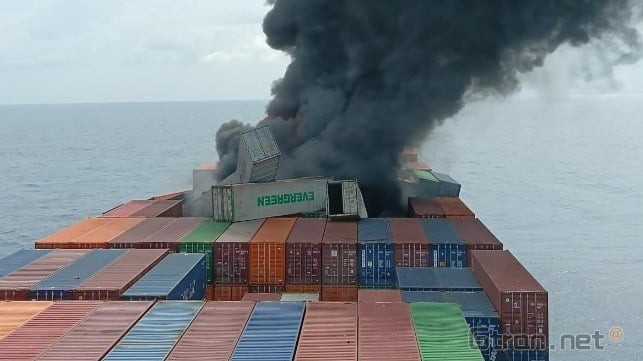
Misdeclared dangerous goods are a primary driver of ship fires, accounting for more than a quarter of all cargo-related incidents, according to Allianz's Safety and Shipping Review 2025. The insurer's analysis further warns that ship fires are at their highest level in over a decade, with several high-profile incidents underscoring the urgency of this new program.
Recent events highlight the critical need for enhanced safety measures. For instance, the Marie Maersk arrived in Malaysia yesterday, September 14, a month after its crew discovered smoke emanating from a container off the coast of Africa. While the fire was contained, Maersk declared General Average to cover the extraordinary firefighting costs. Just last week, the severely damaged hulk of the Wan Hai 503 finally reached a port of refuge following a devastating container fire and explosions that tragically led to the loss of four crewmembers and left the vessel largely burnt out.
"We have witnessed too many tragic incidents where misdeclared cargo has resulted in catastrophic fires, including the loss of life," stated Joe Kramek, President and CEO of the World Shipping Council. "The WSC Cargo Safety Program strengthens the industry’s safety net by integrating shared screening technology, common inspection standards, and real-world feedback to effectively reduce risk."
The core of this program is a sophisticated digital cargo screening tool, powered by technology from the National Cargo Bureau (NCB). It combines AI-driven cargo screening with standardized inspection protocols to identify high-risk, misdeclared, or undeclared shipments before they are loaded onto vessels. Furthermore, the system incorporates machine learning capabilities, allowing it to continuously improve its accuracy and adapt to new and evolving risks.
This advanced system will scan millions of cargo bookings in real-time. It employs keyword searches, analyzes trade pattern recognition, and utilizes AI-driven algorithms to pinpoint potential risks. alerts generated by the system are then reviewed by carriers and, when necessary, verified through targeted physical inspections.
While emphasizing that this program does not absolve shippers of their fundamental obligation to accurately declare dangerous goods, the World Shipping Council believes it will significantly augment safety. The program will also establish common inspection standards for verifying shipments and implement an incident feedback loop, ensuring that lessons learned from real-world cases directly inform and strengthen prevention strategies.
The World Shipping Council recently underscored the scale of the problem, revealing that an analysis of port state inspection data for 2024 showed more than one in ten (11.39 percent) of over 77,600 inspected containers had deficiencies. This report highlighted a slight increase in deficiencies from 2023, reaching a new recent high. Issues identified included misdeclared and undeclared dangerous goods, incorrect documentation, and improper packing.
By significantly improving cargo screening, the World Shipping Council is confident this initiative will prevent incidents, thereby safeguarding crew members, vessels, other valuable cargo, and the precious marine environment. This effort mirrors a successful prior initiative launched in recent years to educate crews on container collapses and the dangers of parametric rolling, which contributed to a notable decline in containers lost overboard.


