


The container shipping industry is undergoing its most significant transformation since the 2016 Hanjin bankruptcy, with traditional growth models being challenged by new competitive dynamics. While mergers and acquisitions previously dominated market expansion strategies, the post-pandemic era has revealed the growing importance of organic growth capabilities - an arena where Maersk and Cosco surprisingly lag behind emerging players.
The Organic Growth Disparity
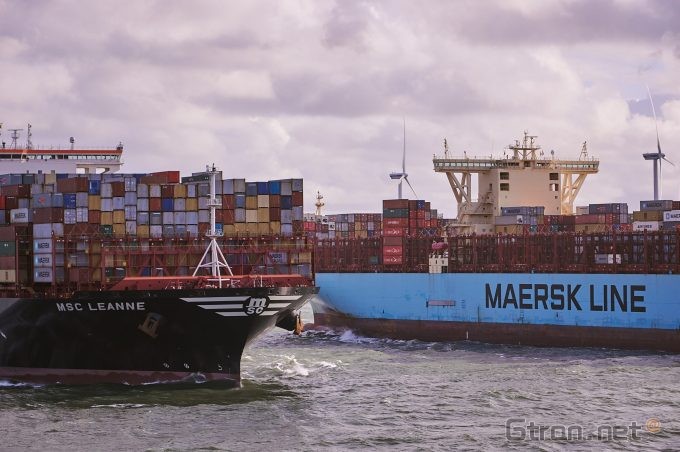
Analysis of operated fleet capacity data shows MSC's remarkable 126% organic growth since 2010, compared to Maersk's mere 8% and Cosco's 23%. This divergence stems from three strategic dimensions:
Fleet Expansion Philosophy
MSC's aggressive newbuilding program (66 vessels ordered in 2024 alone) contrasts with Maersk's focus on logistics acquisitions and Cosco's balanced approach. The Mediterranean carrier's strategy yields 4.2% annual capacity growth versus Maersk's stagnant 0.7%.
Alliance Realignment Consequences
The 2M Alliance dissolution has forced Maersk into the Gemini partnership with Hapag-Lloyd, while Cosco remains tethered to the Ocean Alliance until 2032. These commitments limit operational flexibility, whereas MSC's independent status enables rapid capacity deployment on high-demand routes.
Pricing Strategy Divergence
Current rate wars demonstrate fundamental differences: MSC and Maersk engage in tactical rate cuts (sometimes 15-20% below market) to maintain volumes, while Cosco leverages China's manufacturing rebound through stable contracts. This explains MSC's 11% volume growth versus Maersk's 3% decline in Q2 2025.
The New Competitive Calculus
The industry's organic growth leaders share three characteristics that elude traditional carriers:
Asset-Light Logistics Integration
Wan Hai and ZIM demonstrate how pairing limited owned vessels with strategic charters creates 40% faster capacity adjustment capabilities than fully-owned fleets.
Niche Market Specialization
HMM's focus on auto carriers and ONE's refrigerated expertise deliver 18-22% ROIC compared to Maersk's 9% in general container shipping.
Supply Chain Financing
MSC's private ownership enables reinvestment of 92% of profits into fleet growth, while Maersk's dividend obligations restrict reinvestment to 45% of net income.
Pathways for Traditional Players
For Maersk and Cosco to regain momentum, three strategic pivots appear critical:
Decarbonization Premiums
Early movers in methanol-powered vessels could command 25-30% rate premiums by 2027 as emission regulations tighten.
Emerging Market Corridors
Africa-Asia trade lanes show 14% annual growth potential versus 3% on traditional East-West routes.
Digital Freight Matching
Algorithmic spot pricing systems could help legacy carriers recover 2-3% yield erosion currently suffered through manual negotiations.
The container shipping industry's next decade will reward biological adaptability over mechanical scale. As MSC demonstrates, in an era of volatility, the ability to grow organically may prove more valuable than the size one inherits from previous consolidation cycles.


