


As the global economic landscape crosses the mid-point of 2026, the narrative of "decoupling" from China is facing a harsh reality check. Despite years of geopolitical friction and Western efforts to "de-risk" supply chains, the latest maritime data suggests that China's export engine is not just surviving—it is evolving.
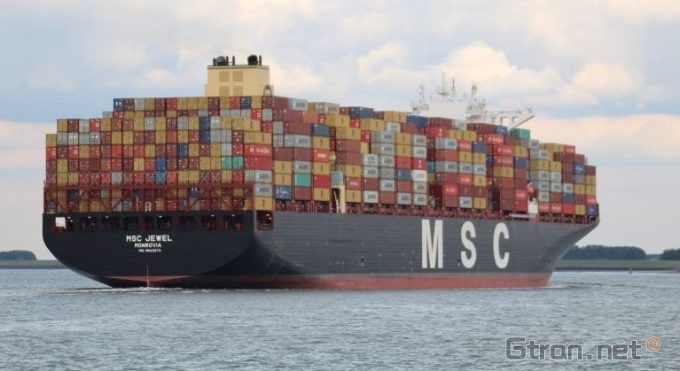
While Western economies grapple with sluggish growth, China's logistics hubs are operating at a blistering pace. Recent analysis from Braemar highlights a stark divergence in global trade health: while U.S. container volumes have contracted by nearly 5% and European throughput remains stagnant at a meager 0.5%, China’s ports are seeing a 3.5% surge.
The crown jewel of this resilience is the Ningbo-Zhoushan port. In the first quarter of 2026 alone, it handled a staggering 11.55 million TEU, a 15% year-on-year increase. These figures, as analyst Jonathan Roach noted, reflect a level of economic vitality that many emerging markets would envy for their total GDP growth. Similarly, Shanghai and Qingdao continue to break records, while Tianjin operates at "full throttle."
The Strategic Pivot to the Global South
The secret to this resilience lies in a massive strategic realignment. Recognizing the shifting political winds in Washington and Brussels years ago, Chinese manufacturers have systematically built new trade corridors. Instead of over-relying on traditional Western routes, the focus has shifted toward the "Global South"—specifically Southeast Asia, Africa, Latin America, and the Gulf.
This is not merely a defensive move; it is a proactive expansion. Southern Chinese ports like Guangzhou are increasingly serving as the primary exit points for vehicle exports and high-tech goods destined for ASEAN markets. This "pivot to the developing world" is now the primary driver of maritime activity in the region.
MSC and the Intra-Asia Boom
The shipping industry is moving quickly to capitalize on this trend. Mediterranean Shipping Company (MSC), the world’s largest container line, recently announced its new "Ochna" service. This standalone intra-Asia route is specifically designed to strengthen the link between China and Vietnam, connecting vital ports like Dalian, Tianjin, and Qingdao directly to Haiphong and Ho Chi Minh City.
The launch of the MSC Hailey Ann II on June 19th symbolizes the industry's commitment to these high-growth corridors. By bypassing traditional transshipment hubs and offering direct connections, carriers are facilitating a more integrated and efficient Asian supply chain—one that functions increasingly independently of Western demand.
A New World Order in Logistics
The data from early 2026 sends a clear message to global policymakers: the "decoupling" rhetoric has failed to account for the adaptability of the world’s second-largest economy. By diversifying its trade partners and investing heavily in the logistics of the Global South, China has secured more options than its critics anticipated.
As Jonathan Roach aptly put it, "Stop ignoring the numbers." While the West focuses on domestic protectionism and de-risking, China’s ports are busy writing the next chapter of global trade—one where the new silk roads lead to the booming markets of the developing world. In the game of global logistics, flexibility and foresight have proven to be China’s most effective response to geopolitical pressure.


