


Global Shipping Industry - The year 2025 was a rollercoaster for container freight rates, not defined by an outright collapse, but by a dramatic shift in power. It was the year carriers realized they could no longer dictate the market's direction, only manage fleeting, short-lived price surges. A potent cocktail of policy shocks, rampant overcapacity, and cutthroat competition ensured that every rally was temporary, every rate reset fiercely contested.
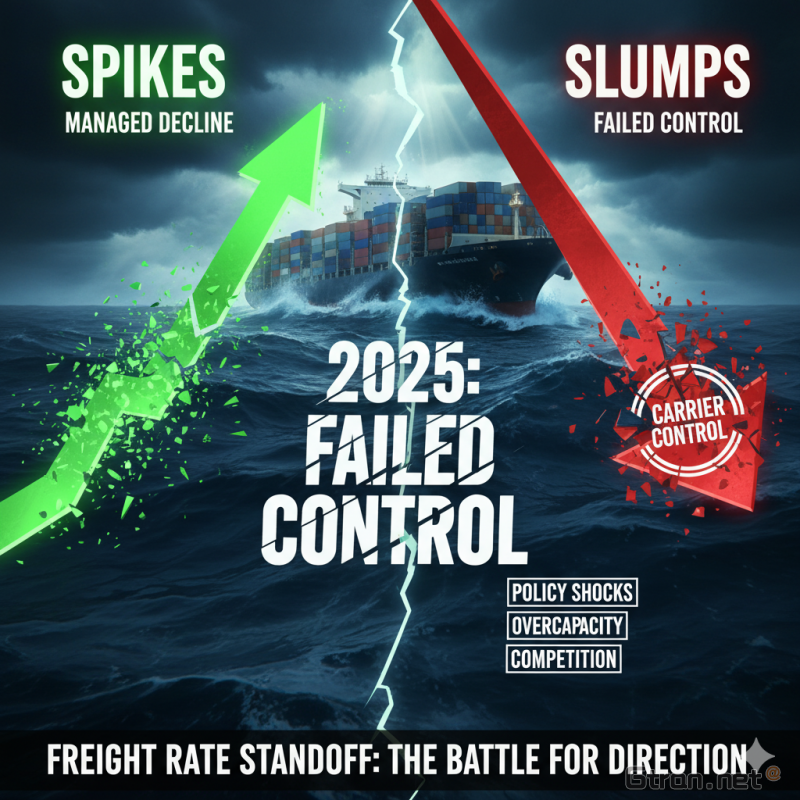
"2025 was not a story of collapse, but of failed control," remarked a leading industry analyst, summarizing a year where the shipping giants grappled with forces beyond their command.
Q1: The Illusion of Control – Managed Decline and "Discipline Theatre"
The year began with an air of "managed decline." After a tumultuous 2024, carriers entered 2025 attempting to exert control over falling rates. There was widespread talk, and even some coordinated action, around blank sailings and capacity adjustments – what some cynically termed "discipline theatre." The goal was clear: to prevent a freefall and gently guide rates downwards without triggering a full-scale price war. For a brief period in January, these efforts seemed to work, providing a temporary floor to the declining market. However, underlying economic weaknesses and the relentless arrival of new mega-vessels quickly began to erode this fragile stability. Shippers, keenly aware of the growing tonnage, resisted any significant rate increases, turning every negotiation into a standoff.
This period set the tone for the rest of the year. The traditional levers of carrier control—capacity withdrawal, general rate increases (GRIs)—found themselves increasingly blunted by a market awash with available space and a shipper base no longer willing to pay pandemic-era premiums. The battle for freight in 2025 was not just about price; it was about who truly held the reins of power in a newly rebalanced global supply chain.
As we delve deeper into the year's events, we'll uncover how external shocks, geopolitical tensions, and an unprecedented wave of new vessel deliveries continuously challenged carrier dominance, transforming the landscape of container freight for years to come.


