


Antwerp, Belgium - Shipping movements have gradually resumed at Belgium's crucial ports after a ten-day industrial action by maritime pilots protesting government pension reforms. The return to a normal work schedule for pilots, which began on Thursday, October 15, follows a national strike that had brought significant parts of Belgium, including its seaports, to a standstill the previous day.
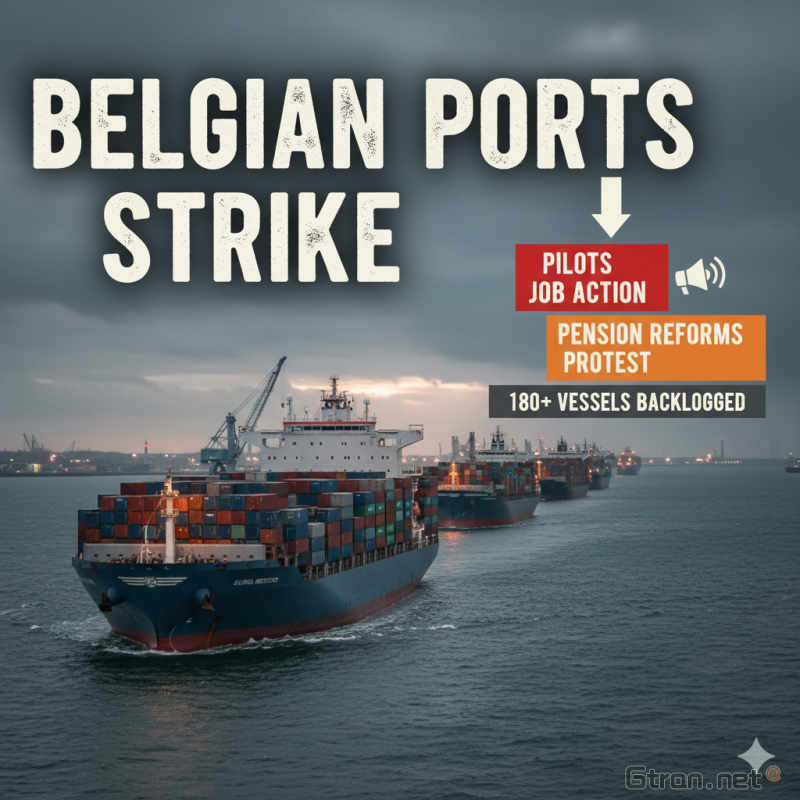
The unions representing the pilots announced a 10-day reprieve, giving the government until October 24 to demonstrate concrete progress through mediation on pension reforms. This move comes after unions accused the government of failing to adhere to a framework agreed upon in June, which aimed to resolve pension issues by the end of November and better align pilots' pensions with those of other government workers. In a statement, the unions indicated they were "giving negotiations another chance."
Since October 5, pilots had been strictly adhering to work rules and limiting their available hours, leading to a substantial backlog of vessels. Ships were left stranded at docks without an assigned pilot or waiting in offshore anchorages, creating significant operational delays.
Further exacerbating the disruption was a nationwide strike called by public unions on October 14. This large-scale protest saw an estimated 80,000 demonstrators in Brussels calling for the government to ease its plans for pension reforms and spending cuts. The national strike severely impacted operations at the country's airports and led to the closure of major ports like Antwerp to inbound and outbound vessels due to understaffing in maritime control centers. While internal port activity continued, the lack of transit capability brought shipping to a halt. Public transport in Brussels, including buses, trams, and the subway, was also suspended.
As of late Wednesday, October 15, the Port of Antwerp reported a backlog of over 180 vessels (60 outbound and 128 inbound), though operations were slowly restarting. However, port officials cautioned that the logistics chain was only operating at approximately 70 percent capacity, as pilots are continuing to enforce mandatory 12-hour rest periods. It is expected to take several days to fully clear the backlog at both Antwerp and Zeebrugge.
Meanwhile, at the neighboring Port of Rotterdam, container vessels have also begun moving again after a week-long strike by lashers demanding better pay. A court order mandated the lashers, responsible for securing and releasing containers, to return to work as of Monday morning. Negotiations are slated to resume, with the court stipulating that the strike could recommence on Friday if no progress is made.
The combined disruptions had caused significant congestion at two of Europe's busiest North Sea ports, raising concerns about potential ripple effects across numerous carrier routes. Some vessels had already begun skipping these ports, and major carriers like Maersk had informed customers of contingency planning and close monitoring of the evolving situation. The industry is now hopeful that the backlogs can be eased as negotiations resume, preventing further disruption to the crucial European shipping network.


